Collector guide
Caring for and displaying die-cast and plastic models
Museum conservation advice applied to a home collection: light, humidity, handling, cleaning and “zinc pest”.
Facts last checked 4 October 2026
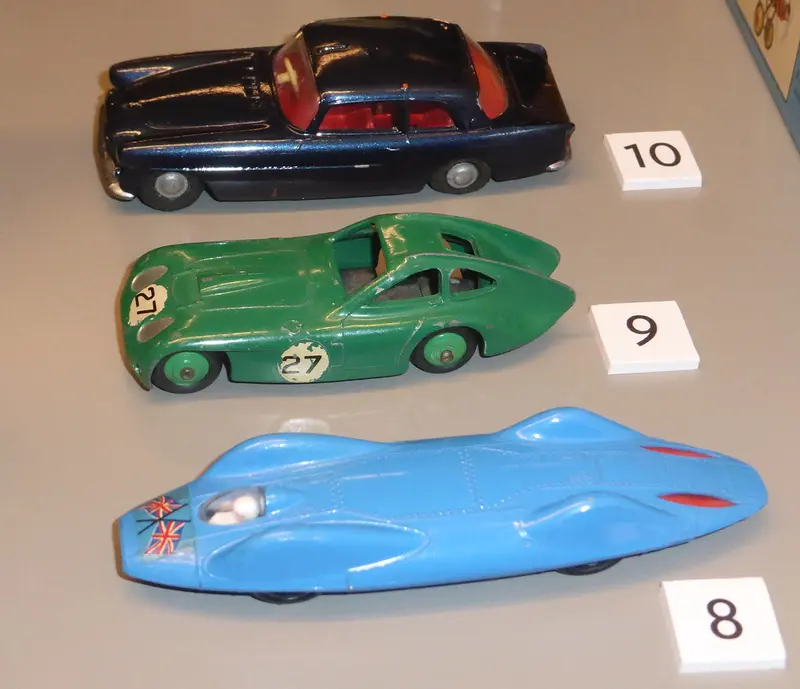
Museums look after toys and models with a few simple rules. Most of them work just as well in a display cabinet at home.
Light: keep it dim and indirect
The Canadian Conservation Institute (CCI) explains that light fades colours and ultraviolet causes yellowing, chalking and weakening of plastics, paper and paint — and that faded colour cannot be recovered. Its advice: keep objects out of direct sunlight, filter out UV, rotate what is on display, and keep sensitive items at low light levels (CCI — light). Boxes and printed card are especially vulnerable.
Humidity: dry and steady
For metals, CCI says moderate relative humidity (40–55%) causes no immediate problems for most metals and dry conditions (30% or lower) are ideal (CCI — metal objects). For plastics and rubber it advises cold, dark, dry storage and avoiding relative humidity above 65% (CCI — rubber and plastic). Avoid lofts, garages and outside walls where temperature and humidity swing.
Handling
CCI advises against touching metal surfaces with bare hands, because fingerprints stain metal; it recommends nitrile gloves, noting that salts can get through cotton gloves after a single use (CCI — metal objects).
Display and storage materials
CCI lists materials that give off harmful gases near metal: wood and wood-based boards, freshly painted or varnished surfaces, and rubber. Safer choices include acid-free board, acrylic or polyethylene plastics, glass and metal (CCI — metal objects). If your cabinet is wooden or newly painted, let it air thoroughly and consider acrylic shelves or bases.
Cleaning
Original paint finishes are very thin and can be damaged by even small amounts of abrasion or chemical cleaning (CCI — metal objects). For plastics and rubber CCI advises no solvents or even water-based cleaners — clean dry, with a soft brush or careful vacuuming (CCI — rubber and plastic).
Zinc pest (“Mazak rot”)
Zinc pest is a destructive corrosion of zinc alloys that contain lead impurities, made worse by high humidity (above 65%). It mainly affects die-cast made from the 1920s to the 1950s; items made after 1960 are usually considered free of the risk (Wikipedia — Zinc pest). The Brighton Toy and Model Index notes that early Dinky production suffered from lead contamination and that a gradual curving of long, thin castings is a warning sign (Brighton Toy and Model Index). Thunderbirds die-cast dates from 1966 onwards, so it is low-risk — but if you also collect earlier Dinky Toys, keep them dry and at a steady temperature.
Plastics that smell or go sticky
CCI says a plastic or rubber object that is sticky, cracking or smelly is releasing chemicals and should be kept apart from other items, especially metals (CCI — rubber and plastic).