Collector guide
Three Thunderbirds: the TV craft, the display team and the Ford
Searching for “Thunderbird models” turns up three unrelated things. Here’s how to tell them apart — and find the right one.
Facts last checked 4 October 2026
Type “Thunderbird model” into a shop’s search box and you’ll get puppet-show rockets, American fighter jets and 1950s convertibles. They share a name and nothing else.
Gerry Anderson’s Thunderbirds (1965 onwards)
The puppet series about International Rescue premiered on ITV on 30 September 1965 (Wikipedia). Its craft — Thunderbirds 1 to 5, FAB 1 and friends — have been made as toys and kits ever since. Search with a maker’s name (Dinky, Matchbox, Corgi, Aoshima) and the craft number, e.g. “corgi thunderbird 2”. → TV series hangar
The USAF Thunderbirds (1953 onwards)
The U.S. Air Force Air Demonstration Squadron has flown displays as the Thunderbirds since 1953, and has used the F-16 Fighting Falcon since 1983 (US Air Force). The name comes from the thunderbird of several indigenous North American mythologies (Wikipedia). Search with the aircraft type, e.g. “F-16 Thunderbirds 1:72”. → USAF Thunderbirds hangar
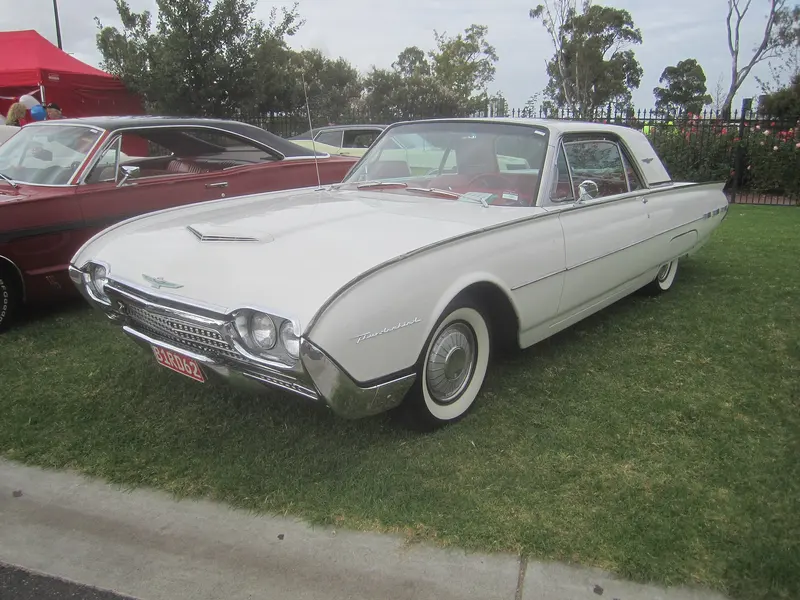
The Ford Thunderbird (1955–2005)
Ford’s “T-Bird” went on sale as a 1955 model in October 1954 and was built in eleven generations up to 2005 (Wikipedia). Search with the model year and scale, e.g. “1957 Ford Thunderbird 1:18”. → Ford Thunderbird hangar
Search tips
- Add the maker, year and scale to cut out the other two.
- Use our ready-made eBay searches and Amazon store, which are already narrowed down.
- Our collection can be filtered by hangar.