Blog · · 3 min read
Clearing out in the new year? Selling collectables and the tax basics
Many collectors thin out their shelves in January. When selling your own things is unlikely to need reporting, when it starts to look like trading, the £6,000 rule for single items, and why online platforms now share sellers’ details with HMRC.
Facts last checked 22 November 2026
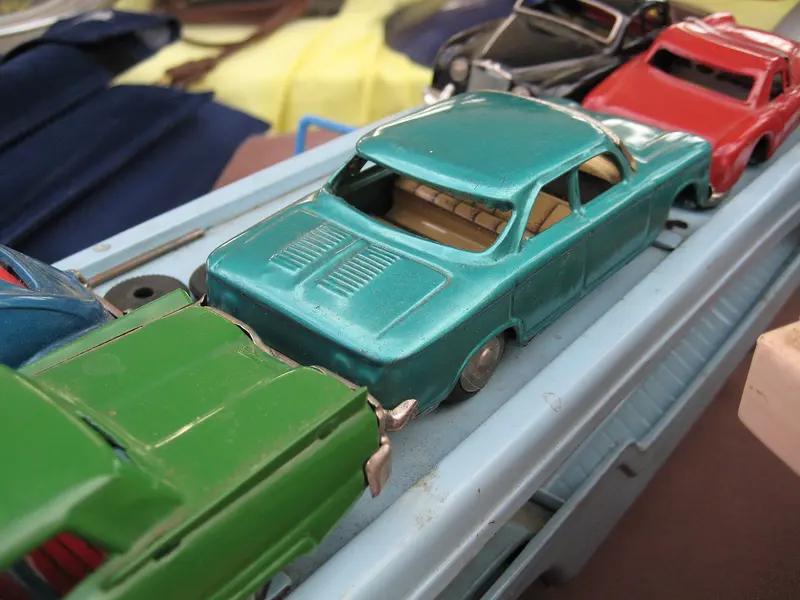
January is a popular time to sort out a collection: duplicates after Christmas, a shelf that's overflowing, or a decision to specialise. If you're selling online, it helps to know how HMRC sees it — mostly, selling your own unwanted things isn't a tax matter, but there are a few lines to be aware of.
Selling your own things
GOV.UK's guidance on income from online platforms says that if you're selling personal possessions, you "probably do not have to pay Income Tax" on them. Personal possessions are things you owned for your own use. Selling a Corgi model you bought to display, or a book you've read, is generally in this group.
When it starts to look like trading
GOV.UK says you're probably trading if you sell goods you bought in order to sell for a profit, or goods you made — including hobby items. For collectors, the line to watch is buying job lots or extra copies of new releases specifically to sell on.
If you are trading, income from goods, services and online content is added together, and you need to tell HMRC if it's more than the £1,000 trading allowance in a tax year (6 April to 5 April). GOV.UK notes that platforms often show calendar-year totals, so you may need to work the figures out for the tax year yourself.
The £6,000 rule for single items
Capital Gains Tax is different from income. GOV.UK says that if you sell a single personal possession for more than £6,000, you may need to pay Capital Gains Tax. The same limit applies to a set of items — GOV.UK's examples are things like matching ornaments or books by the same author — so a set sold together counts as one. Rare boxed sets or a complete run of a range may be worth thinking about here. We don't give valuations, so check auction results and specialist advice for anything you think could be in that territory.
An example
GOV.UK's own example is someone clearing out unwanted items: if none of them sells for more than £6,000, they are unlikely to need to report it. For most collectors thinning out a shelf of die-cast, books and discs, that is the situation. It changes if you start buying to resell, or if a single item — or a set sold together — goes above the limit.
Platforms report sellers to HMRC
Online platform operators may now need to collect and check details about sellers and report them to HMRC. That doesn't create a new tax — GOV.UK's guidance is the same as before about personal possessions — but it does mean HMRC can see sales figures. Keeping simple records of what you sold, when, and what you originally paid makes any question easy to answer.
A simple record to keep
- Date of sale, platform and buyer's order number
- What it was (maker, catalogue number) and the price
- What you paid for it and when, if you know
- Postage and fees
Selling well, and safely
- Describe condition honestly using standard terms — our condition and box grading guide explains them.
- Say clearly if anything is a reproduction part or restored; see spotting reproductions and restorations.
- Pack properly — see posting a model safely.
- Condition and box grading: what “mint” really means
The grading words used by auction houses and sellers — Mint, Near Mint, Excellent, Good, Fair, Poor — plus MIB, MOC and the rest, explained with sources.
- Spotting reproductions and restored items
Reproduction boxes, repainted models and replacement parts are part of the hobby — the problem is when they aren’t declared. What to look for and what to ask.
- Identifying vintage Dinky, Matchbox and Corgi Thunderbirds toys
How to tell the main vintage and modern die-cast apart — catalogue numbers, colours, copyright marks and missing parts — using only facts we can source.
Sources
Checked 22 November 2026. Written in our own words from:
- GOV.UK — Check if you need to tell HMRC about your income from online platforms (gov.uk)
- GOV.UK — Selling online and paying taxes: information sheet (gov.uk)
Spotted something wrong or out of date? Tell us.