Blog · · 3 min read
Baby Bird, Square Bird, Bullet Bird: telling Ford Thunderbird model years apart
Ford Thunderbird models are sold by model year, and the early generations have nicknames. How to tell a 1955 from a 1956, a two-seater from a Square Bird, and a Bullet Bird from a Flair Bird before you buy.
Facts last checked 23 November 2026
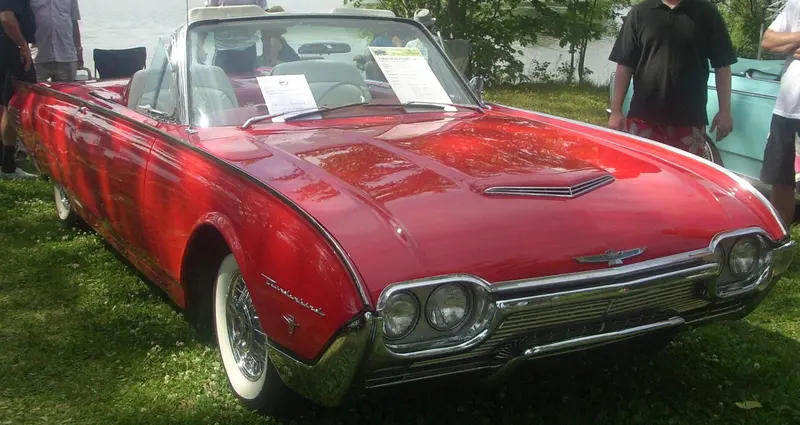
Ford Thunderbird models — die-cast and kits — are almost always sold by model year: "1956 Thunderbird", "1962 Thunderbird". If you're buying a present or filling a gap on the shelf, it helps to know what each year looks like, because sellers sometimes get them wrong.
Where it started
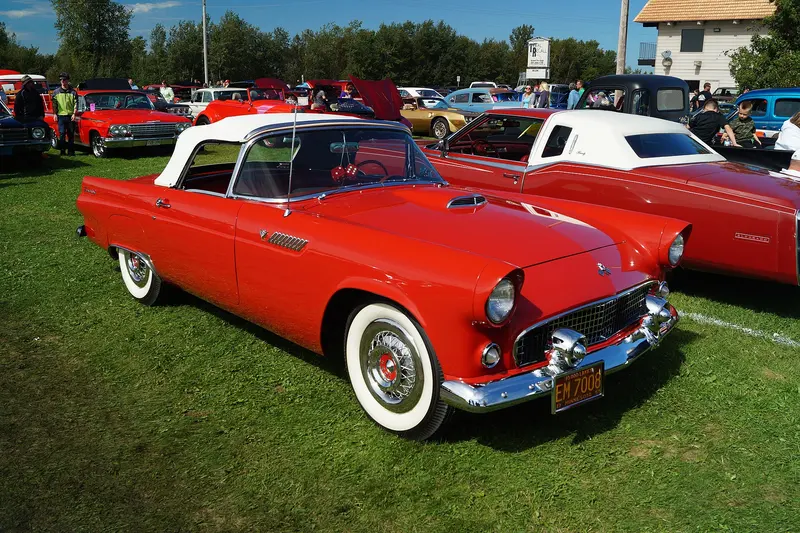
Ford's own history says the Thunderbird was shown on 20 February 1954 at the Detroit auto show, and the first car came off the line at the Dearborn Assembly Plant that September, as a 1955 model. It began as a two-seat car with an open top, aimed at being a "true Ford sports car"; a four-seat version came later. Ford's history adds that by 2005, the car's 50th anniversary, it announced the model would be discontinued.
The nicknames
Enthusiasts give the early generations nicknames, and you'll see them in model listings. Mac's Motor City Garage, a car history site, lists them as:
- Baby Birds — the 1955–57 two-seaters;
- Square Birds — the 1958–60 four-seaters;
- Bullet Birds — 1961–63, named for their "projectile-like styling";
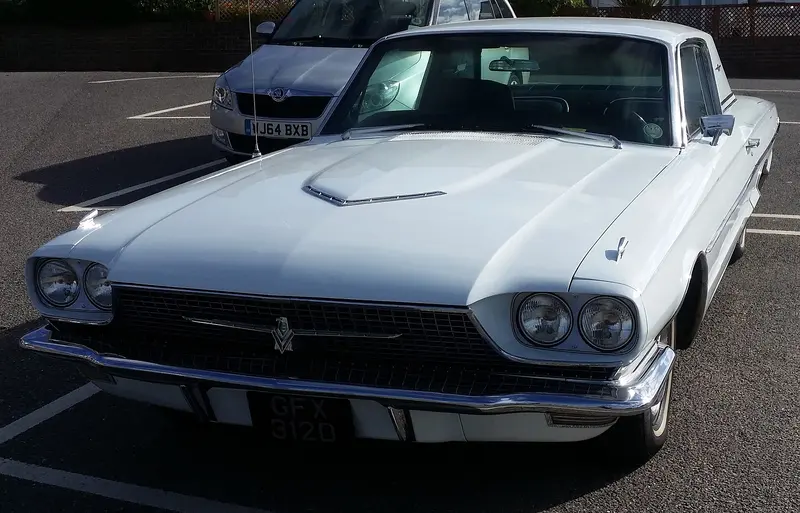
- Flair Birds — the revised generation from 1964.
Ford also notes the car's racing side: Thunderbirds entered NASCAR in 1959 and won six top-division races that year, which is why you'll sometimes see race-numbered T-Bird models alongside the road cars.
Telling the years apart
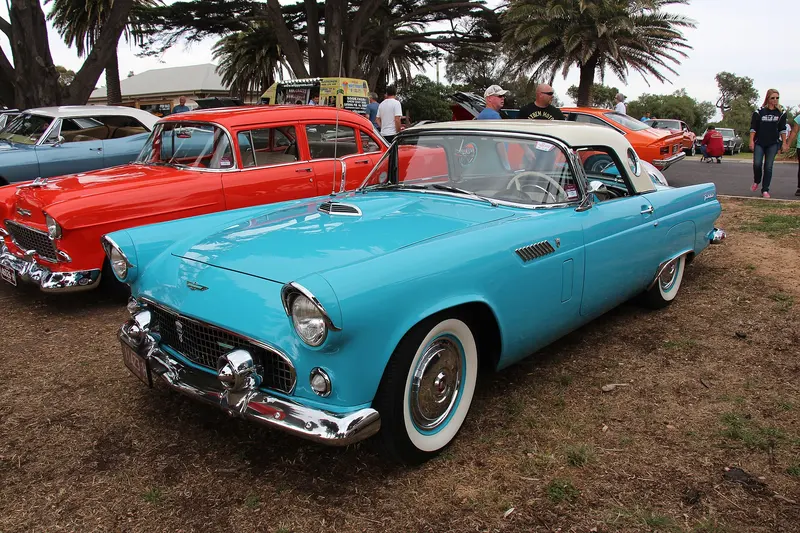
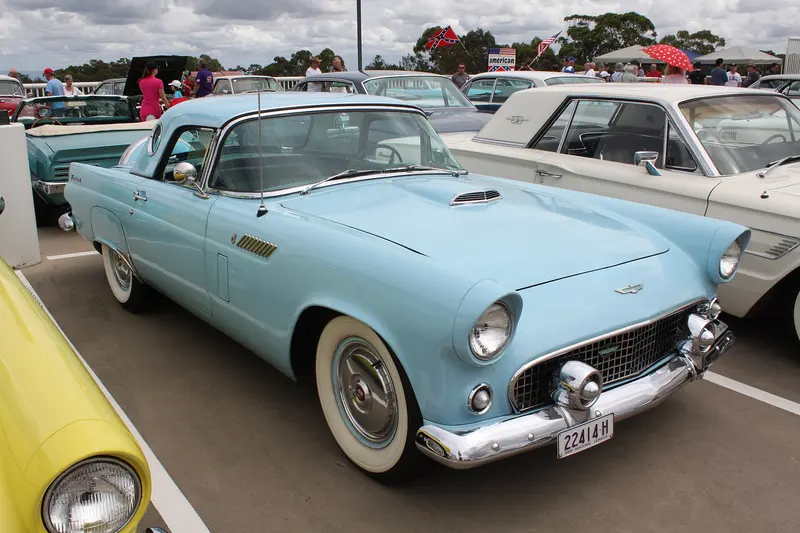
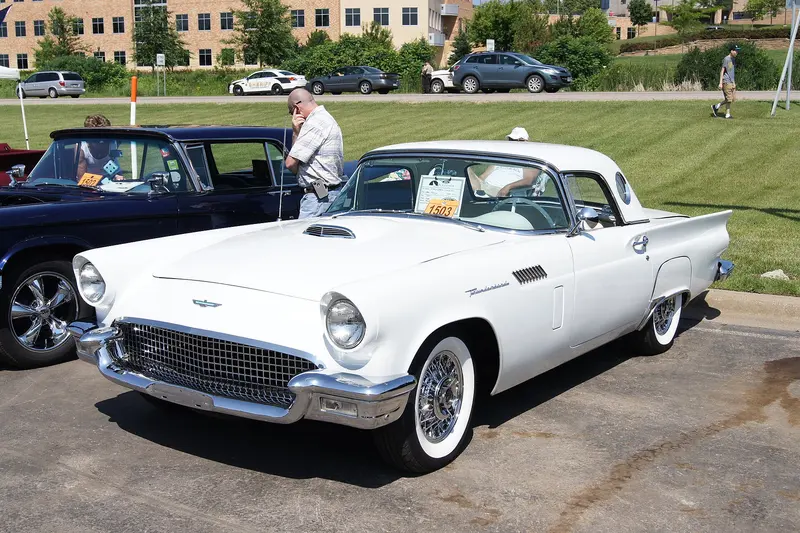
1955–57 (Baby Birds). All two-seaters, so a small, low car. Model makers' descriptions help with the details: Round 2's AMT 1956 kit, for example, includes a removable hardtop with porthole windows and a Continental spare (the spare wheel mounted outside, behind the boot) — two features collectors associate with that year. Round 2's 1957 kit can be built as a convertible, hardtop or custom fastback.
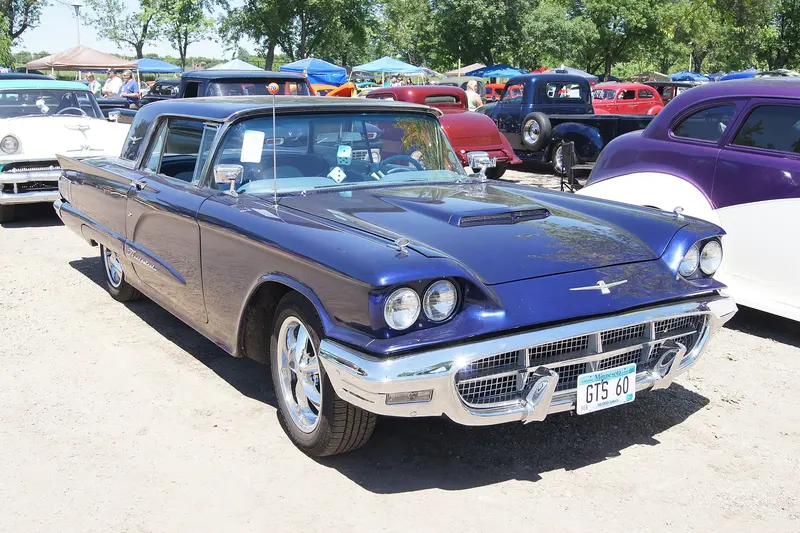
1958–60 (Square Birds). Four seats and a much bigger, squarer body. If a model of a "Thunderbird" has a back seat and slab sides, it's not a Baby Bird, whatever the listing says.
1961–63 (Bullet Birds). A long, pointed, rocket-like shape. Mac's Motor City Garage notes that the 1961 and 1962 cars are similar and differ mainly in trim, while the 1963 has a new grille and a "hockey-stick" line on the front wing and door. It also describes two special versions that appear as models: the Landau coupe of 1962–63, with a vinyl roof and landau irons, and the Sports Roadster, a four-seat convertible with a fibreglass cover over the rear seats that made it look like a two-seater.
Two more Bullet Bird details that show up on good models: Mac's Motor City Garage describes a swing-away steering column to make getting in and out easier, and a convertible roof that folded away into the boot under a rear-hinged deck lid, so the top disappears completely when it's down. A model convertible with no visible folded hood is not a mistake on these years.
1964 on. Later generations grew bigger and changed shape several times; the model year on the box is the safest guide.
Using this when you buy
- Look for the model year in the listing title and on the box or base.
- Count the seats. Two seats means 1955–57.
- Look for the clues: porthole hardtop and outside spare wheel, the 1963 "hockey stick" line, a Sports Roadster cover.
- Check the scale: 1:18 is a large display piece, 1:43 a classic collector size, 1:25 the usual kit scale and 1:87 railway size. See scales explained.
-
American Muscle 1957 Ford Thunderbird Roadster (1:18 die-cast) A large 1:18 die-cast 1957 Thunderbird in Raven Black with a white porthole hardtop, modelled on an “E-Code” car. Current
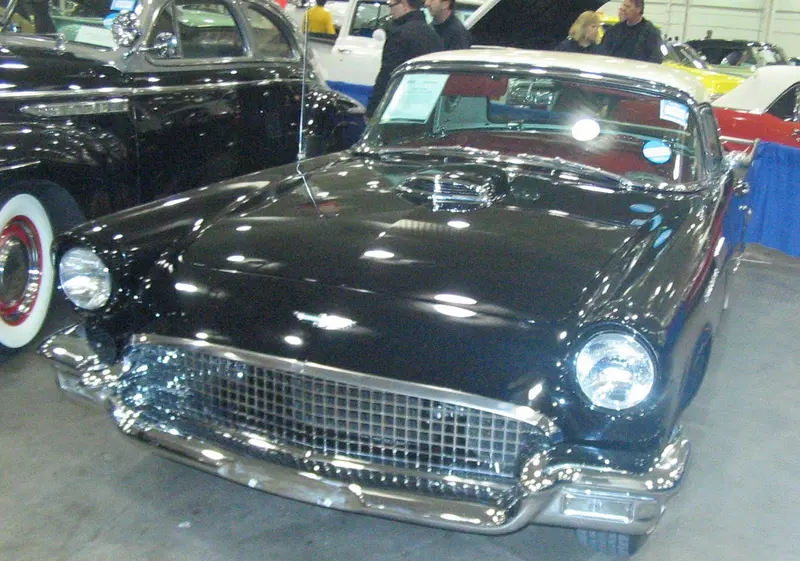
Photo: Bull-Doser at English Wikipedia, Public domain
-
Motormax 1956 Ford Thunderbird convertible (1:18 die-cast) A first-generation two-seater convertible with opening doors, bonnet and boot. Current
-
Lucky Die Cast 1955 Ford Thunderbird (1:18 die-cast) The very first Thunderbird model year, as a 1:18 die-cast with opening doors, bonnet and boot. Recent
-
Sun Star 1960 Ford Thunderbird (1:18 die-cast) A second-generation “Square Bird” as a 1:18 die-cast. Current
Kits
AMT's 1:25 kits cover several years. Round 2 rates its 1956 and 1957 kits at skill level 2, with paint and glue needed — a good next step after a first kit. See building your first model kit.
-
AMT 1956 Ford Thunderbird (1:25 kit) A first-generation two-seater with removable porthole hardtop and continental spare wheel. Current
-
AMT 1957 Ford Thunderbird (1:25 kit) A three-in-one kit of the 1957 two-seater: convertible, hardtop or custom fastback. Current
-
AMT 1962 Ford Thunderbird (1:25 kit) The third-generation “Bullet Bird” as a 1:25 kit. Current
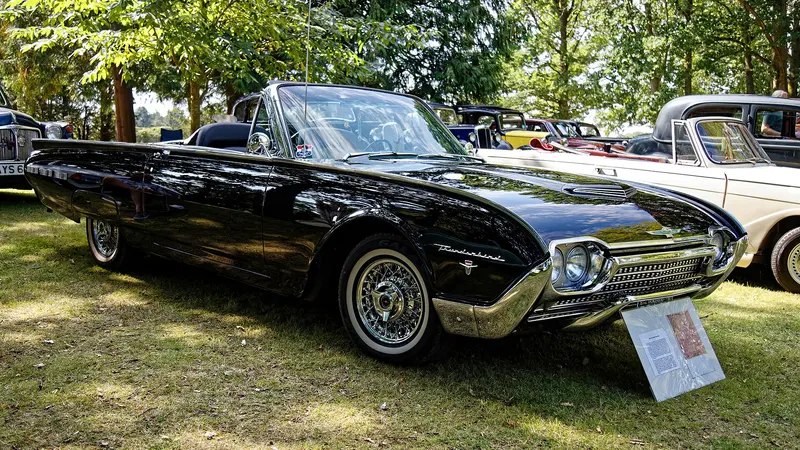
Photo: Acabashi, CC BY-SA 4.0
-
AMT 1966 Ford Thunderbird hardtop/convertible (1:25 kit) A fourth-generation Thunderbird as a three-in-one kit: convertible, hardtop or custom. Current
Sources
Checked 23 November 2026. Written in our own words from:
- Ford Motor Company — Thunderbird history (corporate.ford.com)
- Mac's Motor City Garage — Bullet Birds: the 1961–63 Ford Thunderbirds (macsmotorcitygarage.com)
- Round 2 — AMT 1956 Ford Thunderbird 1:25 kit (round2corp.com)
- Round 2 — AMT 1957 Ford Thunderbird 1:25 kit (round2corp.com)
Spotted something wrong or out of date? Tell us.