Blog · · 3 min read
How many Thunderbirds are there? Thunderbirds 1–5 explained
There are five Thunderbirds. What each craft does, which Tracy brother flies it, and how knowing the numbers helps you find the right toy or kit.
Facts last checked 23 November 2026
Ask how many Thunderbirds there are and the answer is five — Thunderbirds 1 to 5, the numbered craft of International Rescue in Gerry Anderson’s 1965–66 series. Each has its own job and its own Tracy brother at the controls, and knowing which is which makes it much easier to find the right toy or model kit. This is a quick guide to the numbers, using the official Gerry Anderson website.
Thunderbirds 1 to 5 at a glance
| Craft | What it is | Usually flown or crewed by | |---|---|---| | Thunderbird 1 | Rocket for rapid response — first to the danger zone | Scott Tracy | | Thunderbird 2 | Heavy transporter carrying rescue equipment in interchangeable pods | Virgil Tracy | | Thunderbird 3 | Red space rocket for rescues in space | Alan Tracy | | Thunderbird 4 | Yellow submarine for underwater rescues | Gordon Tracy | | Thunderbird 5 | Satellite in orbit that keeps watch for distress calls | John Tracy |
The five craft belong to International Rescue, founded by Jeff Tracy, who directs operations from Tracy Island — the family home and the organisation’s hidden headquarters. The series began on 30 September 1965 and ran to 32 episodes across two series.
Thunderbird 1
The rapid-response craft. The official site describes it as reaching the danger zone first and assessing the rescue before the heavy equipment arrives, and a Gerry Anderson blog post gives its top speed as 15,000 mph. Scott Tracy flies it and takes command of the rescue on the ground.
Thunderbird 2
The heavy-duty transporter, flown by Virgil Tracy, and for many collectors the most famous craft of all. It carries equipment to the rescue in six numbered pods; Thunderbird 4 is kept in Pod 4, while the contents of the other pods change from rescue to rescue. That’s why so many Thunderbird 2 toys come with a pod and a small Thunderbird 4 — from the Dinky Toys of 1966–1979 to Corgi’s die-cast models today.
Thunderbird 3
The red space rocket. Alan Tracy is in command when International Rescue goes into space, and the official site lists it as the space-rescue craft.
Thunderbird 4
The yellow submarine, piloted by Gordon Tracy. It is dropped into the sea by Thunderbird 2 and takes the rescue beneath the waves. Because it lives in Pod 4, it is often sold with Thunderbird 2, though it has had models of its own too.
Thunderbird 5
A satellite in orbit around the Earth that receives distress calls from all over the world and passes them to Tracy Island. It is permanently manned, usually by John Tracy (the official series page lists John and Alan as its crew). Fans like to point out that the words INTERNATIONAL RESCUE appear on the inside of its window.
What about FAB 1 and the other craft?
The numbering stops at five, but International Rescue has more machines. The best known is FAB 1, Lady Penelope’s six-wheeled pink car, driven by Parker; Lady Penelope is International Rescue’s London agent. Thunderbird 2’s pods also carry smaller rescue vehicles, which turn up in toy ranges alongside the main craft.
Collecting by number
When you search for a toy or kit, adding the craft number cuts out a lot of noise — “thunderbird 2” rather than just “thunderbirds”. A few tips:
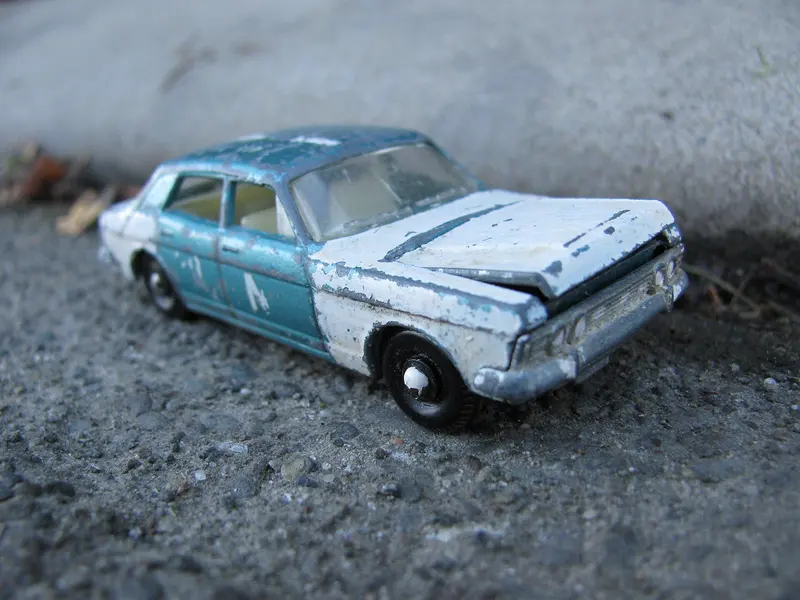
- Add the maker: Dinky, Matchbox, Corgi, Aoshima or AiP, for example “corgi thunderbird 2”. Our guide to identifying vintage Dinky, Matchbox and Corgi toys explains how to tell the main versions apart.
- Check the scale: the craft are very different sizes, so “matching” models from one range may not be to the same scale. See scales explained.
- Building rather than buying? The model kits shelf covers kits of the craft from the 1960s to today.
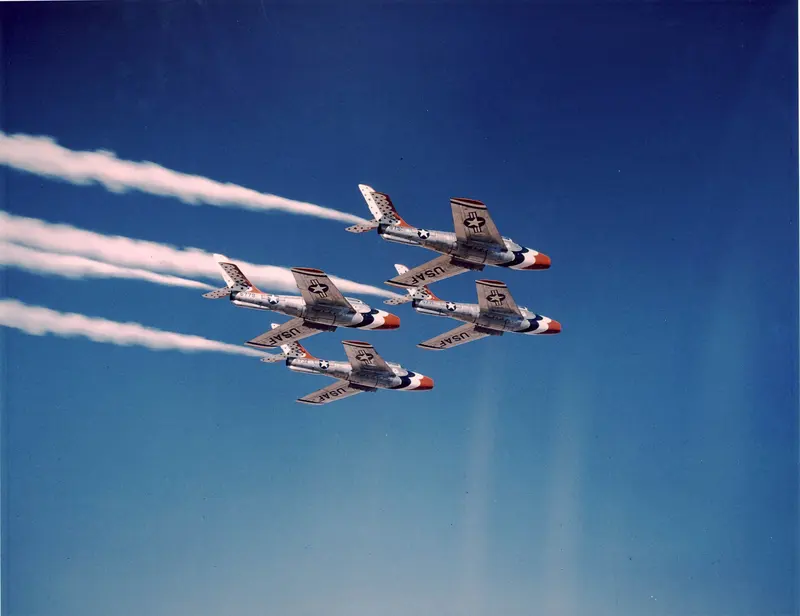
- Not the craft at all? The name is shared with the US Air Force display team and the Ford car — see three Thunderbirds.
For when each range came out, see our Thunderbirds timeline.
Sources
Checked 23 November 2026. Written in our own words from:
- Gerry Anderson — Thunderbirds (official series page) (gerryanderson.com)
- Gerry Anderson — Thunderbirds Thursday: introducing the Thunderbirds (gerryanderson.com)
- Gerry Anderson — Coolest features of Thunderbirds 1 to 5 (gerryanderson.com)
Spotted something wrong or out of date? Tell us.